
Helping families find joy at the table
Feeding and swallowing therapy for children
at the table
There's something special about sitting at the kitchen table. It's where families gather, where the day gets talked through, and where traditions are passed down one meal at a time.

ANNA's Table provides individualized, evidence-based feeding and swallowing therapy by telehealth, working with Massachusetts families toward mealtimes that are safer, less stressful and more joyful.
- Individualized feeding and swallowing therapy
- Children through age 6 — no autism diagnosis needed to be seen


ANNA's Table
Every family has
their own story
Every family comes to us with different concerns—and different hopes for what eating and mealtimes can look like for their child and family.
We build our care around your family's story. That's why every child receives a comprehensive evaluation before we ever talk about treatment.
Using evidence-based feeding and swallowing treatment, we work to take the stress out of mealtime—not just for your child, but for your whole family.
Our goal is helping your family get back to the table together—with less stress, and a little more joy.
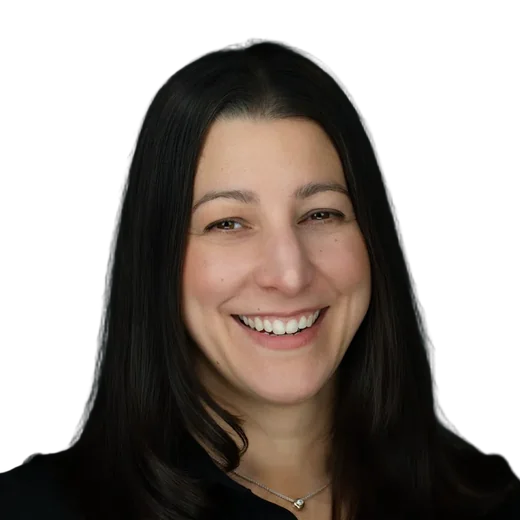 Jennifer Llado, MS, CCC-SLP, CPXP
Director of Operations
Jennifer Llado, MS, CCC-SLP, CPXP
Director of Operations
Clinically reviewed September 2026

The full picture matters
Similar signs can have very different causes
Feeding concerns in young children, autistic or not, can come from many different places. What others may describe as “picky eating” or “food refusal” may be a sign of something deeper. Understanding what is driving the difficulty is the foundation of the right care.
-
Sensory
- Strong reactions to certain textures, tastes, temperatures, or smells
- Worry, gagging, or refusing when offered a new or unfamiliar food
- Eating only a small list of “safe” foods that doesn’t grow over time
- Needing mealtime to look or feel a certain way to feel comfortable
- Avoiding a food after a scary moment, like choking or getting sick
-
Structural or Physiological Concerns
- Trouble sucking, chewing, or moving food around in the mouth
- Coughing, choking, or a gurgly-sounding voice during or after eating
- Trouble managing breathing and swallowing at the same time
- Reflux, tummy trouble, painful swallowing or other health issues that make eating uncomfortable
- Slow weight gain or growth

Who we serve
Every child deserves a comprehensive evaluation
Children from birth through age 6.
Signs to notice
Your child may benefit from a feeding evaluation
-
Mealtimes regularly end in tears, tantrums, or a battle—for your child, for you, or both.
-
Your child gags, coughs, or chokes frequently during meals.
-
Your child's list of accepted foods is short, or foods they used to eat have dropped off it without explanation.
-
Mealtimes take much longer than expected, or your child avoids sitting down to eat.
-
Your child struggles with certain textures, such as crunchy, mixed, or lumpy foods.
-
Your child has never transitioned off purées, or struggled significantly moving from bottle or breast to solid foods.
-
Weight gain or growth has slowed, or your pediatrician has raised a concern about nutrition.
-
Your child seems anxious, upset, or shuts down at the sight of new or unfamiliar foods.
-
Feeding difficulties are getting in the way of family routines, school lunches, playdates, eating out, or travel.
-
You simply have a feeling that something is wrong.
Common questions
Questions families
ask first
If yours isn’t here, email intake@annaautismcare.com or call (617) 693-5767.
Getting Started
Sometimes it is. Plenty of young children eat from a short list of foods for a while and widen it again on their own, with no help from anyone. What is worth a closer look is when the list keeps shrinking, when meals are distressing for your child or for you, or when gagging, coughing or choking is part of eating.
Whether it gets called picky eating, selective eating or food refusal matters much less than what is causing it—and no one can tell you that from a description, an article or a checklist. That is what an evaluation is for.
Same profession, different focus. ANNA's Table SLPs specialize in working with pediatric feeding and swallowing disorders. ANNA wants your child's care to be provided by an expert who is passionate about feeding.
Children from birth through age 6.
Evaluations are scheduled on Saturdays. It is deliberate: a weekend appointment means you don't have to pull your child out of school or daycare, and it usually means both caregivers can be there, which matters more than people expect for a feeding evaluation.
No. ANNA's Table serves children through age 6, with or without a diagnosis. Feeding and swallowing difficulties show up in all kinds of children, for all kinds of reasons. If a diagnosis is what you are looking for, that is a different service at ANNA: autism testing and diagnostic evaluations. Intake can point you to either one.
During your child's evaluation, a speech-language pathologist will spend time getting to know your child's eating and mealtime history, then watch your child eat and drink foods you've brought from home (or foods we offer, depending on what's most helpful). We look at both sides of feeding — how your child responds to different textures, tastes, and the mealtime experience itself, as well as how their mouth, throat, and swallow are working together to keep eating safe and comfortable. The evaluation is relaxed and the environment of our centers are not clinical or scary. Afterward, we'll walk you through what we saw and, if therapy is recommended, talk with you about next steps and what a treatment plan could look like for your family.
Therapy sessions
At your own table. Therapy is delivered by telemedicine, so your SLP joins the meal you were already going to serve, in the chair your child already sits in, with the plates and cups you already own. Feeding skills have to work in your kitchen in the end, so that is where we would rather practise them.
Our speech-language pathologists are licensed in Massachusetts, so telehealth sessions are available anywhere in the state. If you live outside Massachusetts, tell intake and they will say what is possible.
Anywhere in the state. Feeding therapy here is delivered by telehealth, so there is no catchment area and no drive: a family in MetroWest, in Greater Boston, on the South Shore or out past Worcester joins the same way, from their own kitchen. What bounds this is licensure rather than geography, which is why intake checks your address before you book.
ANNA's seven centers—Andover, Braintree, Foxborough, Sudbury, Wayland, Weston and Woburn—are where the center-based services happen. If your child already goes to one of them, feeding therapy can be added without adding a trip.
At breakfast and dinner mealtimes—the times feeding difficulties actually happen. A session is a real meal with your SLP on the screen, not a practice one scheduled around the clinic's day.
A phone, tablet or laptop with a camera, propped where it can see your child's face and hands, and the meal you'd normally serve. Nothing needs to be bought and nothing needs to be tidied. Your SLP will help you find the camera angle on the first call.
We'll send you a link to join; there is no app to install.
Licensed speech-language pathologists provide the feeding therapy. You may not have the same clinician for the evaluation and the treatment.
Coverage and next steps
ANNA's Table is in-network with Mass General Brigham (MGB), Blue Cross Blue Shield (BCBS), and Aetna. What a plan covers still depends on your specific benefits, so our team can verify yours and walk you through your options before your first appointment.
It depends entirely on what the evaluation finds, so we won't quote you a number before we've met your child. What we will do is tell you at the evaluation what we expect, and revisit it with you as your child's plan progresses.
Yes, and it's worth doing. ANNA BCBAs and SLPs each bring a unique skill set and perspective to the table. When they work together, your child gets the full benefit.
Ready when you are
Let's understand what's happening
If any of this sounds familiar, we'd love to talk with you. A comprehensive evaluation is the first step toward helping your family find its way back to the table together. Evaluations are on Saturdays, and therapy is delivered by telehealth anywhere in Massachusetts, from MetroWest and Greater Boston to the South Shore.
- Start with a conversation about your child
- A comprehensive evaluation before any treatment plan
- We coordinate directly with your child's physician


The information on this page is general educational information about pediatric feeding and swallowing, not medical advice, and it is not a substitute for evaluation, diagnosis or treatment by a licensed clinician who knows your child. Reading it does not create a clinician–patient relationship with ANNA or ANNA's Table. If you have questions about your child's feeding, swallowing, growth or nutrition, please talk with your child's pediatrician or a licensed speech-language pathologist. In an emergency, call 911.